This roadmap is built on listening
Over the course of a year, we asked people who work with nature — in cities, rural landscapes, and informal settlements across four continents — what helps them, what stops them, and what they wish institutions understood.
Three kinds of evidence came together.
We asked the world. A global survey reached 445 people in 43 countries: grassroots organisers, city planners, researchers, gardeners, campaigners. They told us what they need and what gets in the way.
Image:

We sat with practitioners. Twenty long conversations with people doing this work — a legal advocate in Kenya, an urban planner in Colombia, an educator in Ireland, a community campaigner in Nepal. Their words appear throughout this roadmap.
We reviewed the field. Sixteen EU-funded nature projects and the reports they produced — 31 deliverables in all, plus four expert reports. Together they show how widely citizen engagement has been approached, from digital tools and participatory methods to institutional arrangements and governance models.
Image:

Everything is open. All of it — anonymised interviews, survey results, desk research — is published in a searchable database anyone can use.
Key findings
1. The language disconnect
Nature-based action is already happening at grassroots level, but it is rarely called NbS. Dutch practitioners prefer “nature-inclusive architecture” or “phytoremediation”. Spanish and Colombian interviewees speak of restoration, landscape regeneration, or inspiration — rather than solutions. In heavy infrastructure, “green design” lands better than NbS.
Communities organise around tangible, lived concepts: rivers, soil, trees, food sovereignty. The gap is in technical terminology, not in local action.
2. Active citizenship and agency
Long-term care is maintained when citizens feel ownership. London's Ranger programme empowers residents to lead local nature recovery. In Nairobi, the Ecological Justice Network creates parks that help young people rehabilitate from crime — a symbiotic relationship between social and ecological healing.
3. Alternatives narratives create legitimacy
Where formal NbS framing closes doors, organisations pivot to language that resonates. In the Global South, recognition is often tied to indigenous wisdom and spiritual relationships with nature — mountains as deities in Nepal — shifting the focus from solving problems to strength-based approaches. In Kenya, the discourse is reframed through ecological justice, where protecting nature is inseparable from human rights and the fight against poverty.
4. Trust and time are non neogotiable
Meaningful co-creation cannot be rushed or forced. The most overlooked element of citizen engagement is the process itself — requiring time, care, and sustained presence to overcome historical trust deficits between marginalised communities and local government. Shortcuts here undermine everything downstream.
5. Competing socio-economic priorities
Communities value nature, but engagement is severely hindered by immediate economic pressure. When people are struggling to make a living, long-term ecological goals cannot come first. This is not apathy. It means NbS must be explicitly linked to tangible co-benefits — job creation, health, affordable food — to gain local traction.
6. The vital role of civic brokers
Civil society organisations act as scale-crossing brokers. They bridge rigid municipal structures and informal neighbourhood groups, translate scientific data into accessible formats, and provide the safe spaces necessary for genuine deliberation. In Kenya, the Rivers and People's Plan facilitates negotiated approaches between residents and government to integrate nature into informal settlements. Without these intermediaries, the communities who most need support stay invisible to the systems that could provide it.
7. Strategic embedding
Integration is most effective when embedded in a high-level strategy. Poland's Metropolitan Climate Strategy integrates NbS across 15 municipalities. In Hungary, a Green Infrastructure Jury provides expert review of proposals before submission. Strategy is what turns isolated projects into systemic change.
8. Capacity building and knowledge access
Municipalities and citizens alike need access to data — and access is uneven. Proposals emerging from the research include creating knowledge banks and granting communities access to university laboratories for soil testing. The open-source database published alongside this roadmap is one response to that gap.
Ask the research directly
Every anonymised interview, the aggregated survey results, and all desk research produced during this roadmap's development have been consolidated into a single open, searchable database. You can read it, search it, or put questions to it.
It was built for a specific reason. Research of this kind usually ends up compressed into a PDF, with the source material inaccessible. Opening it means others can verify our reading, disagree with it, or build on it — and can pull out what is useful for their own context rather than only what we chose to highlight.
Image:

What is inside?
20 anonymised practitioner interviews, full transcripts
Aggregated results from the global survey of 445 respondents across 43 countries
Desk research from 16 EU-funded projects and 31 deliverables
120 verbatim practitioner quotes organised across six analytical themes
Who is it for?
Researchers building on this work. Practitioners searching for tools, methods, or co-learning case studies that fit their own context. Policymakers wanting to see the evidence behind a particular recommendation. Anyone curious about what people actually said.

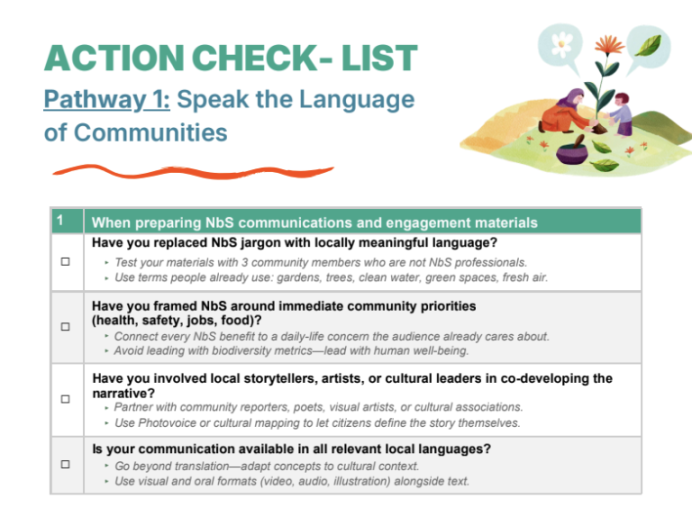
Image:

Image: