Citizen action for nature already exists
Across continents, communities are protecting ecosystems, restoring landscapes, growing food, and caring for green spaces — often without institutional support, formal recognition, or access to funding.
They rarely call it “nature-based solutions”. They speak of restoration, green space, food sovereignty, neighbourhood care. Of neighbours, caretakers, ancestors, defenders.
This roadmap starts from that reality. The task is not to teach communities about nature. It is to build the systems that recognise, support, and sustain the knowledge and care they already hold.
Image:

Motivation is not a barrier
This is the central finding of three years of research. People care. What is missing are the enabling conditions: accessible communication, inclusive governance, and sustained institutional and financial support.
In our global survey of 445 people across 43 countries, the barriers named most often were structural:
63% — limited access to long-term funding
56% — insufficient communication tools
52% — weak connections with local authorities
None of these is a problem of willingness. All of them are problems of design — and design can be changed.
Image:

"If you bring a houseplant home… Do you set it on your desk and never water it again? Of course not. We have to think about that same sort of attention to care as not a burden… that we're always going to have to maintain."
Interviewee 20, Research Social Scientist, USA


What this roadmap offers
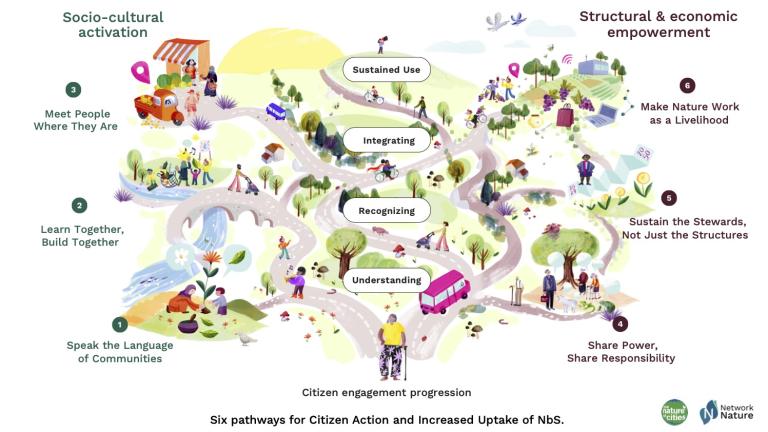
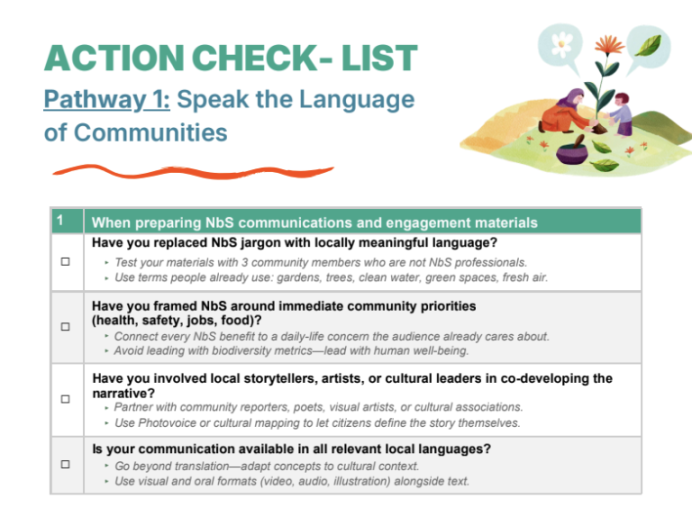
Six strategic pathways, mapped across four stages of uptake, from a community's first act of care to the funding and governance structures that let it endure. Each pathway names what is happening now, why it matters, what needs to change, and who is responsible — with inclusion built in at every step rather than added at the end.
It is built to be used in pieces. Take one pathway. Take one checklist. Take the whole framework. Whatever fits your role, your mandate, and where you are right now.
Image:

Who it is for
Citizens and community members — No prior knowledge needed. Use this to find language for what you already do, connect with others, and identify the support you can claim.
Civil society organisations and intermediaries — A practical guide for programme design, advocacy, and community mobilisation, drawn from EU and global initiatives.
Policymakers and public authorities — Concrete policy actions, governance reforms, and funding mechanisms, differentiated across national, regional, and municipal scales.
Researchers and knowledge institutions — The full evidence base, plus an open-source research database you can query directly.
Image:

Image:

Image: