About NATMed

NATMed is a research and innovation project that aims to demonstrate, evaluate, and scale up NbS to address key water-related challenges in the Mediterranean region. The project responds to increasing pressures caused by climate change, water scarcity, ecosystem degradation, and growing socio-economic demands. The project promotes the adoption of Full Water-Cycle – NbS (FWC-NbS) in five Case Studies across different Mediterranean contexts (Spain, Greece, Italy, Türkiye and Algeria).

Image:
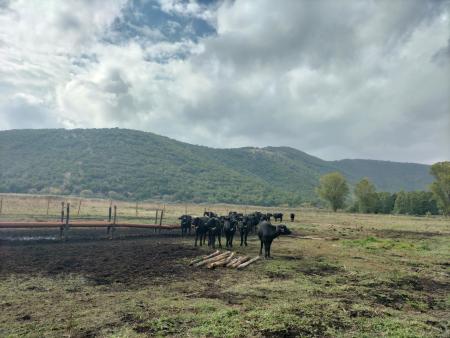
Greece - Livestock grazing
Greece - Livestock grazing

Project Objectives

  1. Co-design and test five Full Water-Cycle – NbS (FWC-NbS) to impact in different phases of the water cycle and the seasonal water balance. 
  2. Implement, test and validate the 5 Full Water-Cycle – NbS in 5 Case Studies under IUCN Global Standard.
  3. Establish a NATMed Mediterranean Community of Practice to develop participatory and coordinated processes for sustainable and integrated water management. 
  4. Develop a replicability plan to enhance the sustainability and engagement of NATMed outcomes and lessons learnt.

Methods

  1. Implementation and monitoring of NbS in real-life case studies, generating evidence on their technical performance, environmental impact, and socio-economic benefits. 
  2. Co-design and active stakeholder engagement through Mediterranean Community of Practice, ensuring solutions are tailored to local needs, governance contexts, and cultural practices. 
  3. Assessment of the Case Studies under the IUCN Global Standard for NbS design, validation and scaling-up.
  4. Development of a Catalogue, Guidelines and Decision-making tool to improve the governance of water management and support water regulators, SMEs and end users with the decision-making processes for NbS implementation.
  5. Capacity building through training programmes and knowledge-sharing activities, empowering practitioners, SMEs, and public authorities to adopt NbS.

Barriers

  1. Regulatory and governance barriers, including complex permitting procedures, fragmented responsibilities across institutions, and lack of clear standards for NbS implementation. 
  2. Limited funding for continued maintenance and monitoring beyond the end of the project may restrict the long-term operation, performance evaluation, and replication of NbS. 
  3. Data limitations, such as insufficient long-term monitoring data or lack of historic data, affecting impact assessment. 
  4. Stakeholder engagement challenges, including uneven participation, limited incentives, or conflicting interests among local actors and end-users.

Funding

PRIMA programme (n.2221)