Image:
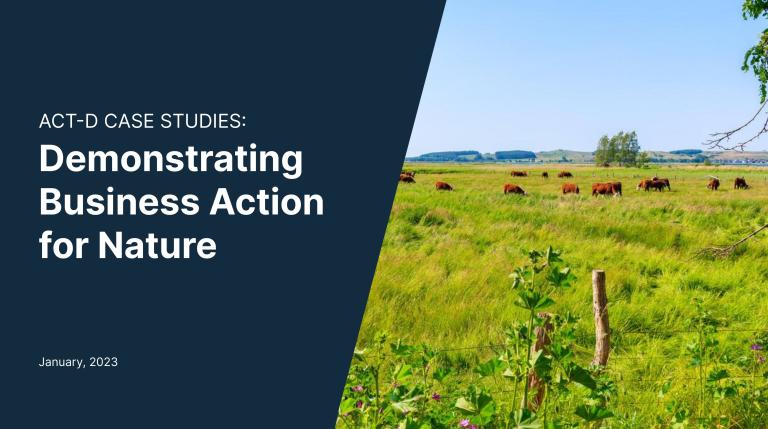
Guiding Businesses in Implementing NbS in the Agrifood Sector

This Guidance Booklet from NetworkNature shows how agrifood businesses can move from pilot projects to embedding Nature-based Solutions in decisions.

Are you looking to develop, finance, insure, implement, or scale Nature-based Solutions? The NbS Business Forum connects SMEs and nature-based enterprises, investors and banks, insurance companies, and large corporates with the knowledge, tools, events, partners, and opportunities available through NetworkNature and the wider NbS ecosystem.
As NetworkNature’s private-sector gateway, the Business Forum provides clear entry points into relevant resources and initiatives. It supports businesses and financial actors in identifying opportunities, learning from practical experience, and integrating Nature-based Solutions into their strategies and decisions.
Businesses depend on healthy ecosystems for water, raw materials, productive land, climate regulation, and protection against natural hazards. Nature-based Solutions can help companies and financial actors manage climate- and nature-related risks, strengthen the resilience of operations and supply chains, and create opportunities for innovation, investment, and new business models.
By restoring ecosystems and working with natural processes, NbS can support climate adaptation, biodiversity, and long-term economic resilience at the same time. They can therefore contribute to business objectives ranging from risk reduction and operational continuity to sustainable finance and nature-positive strategies. Explore the NetworkNature resources on NbS for business and finance.
EU policies increasingly influence how businesses and financial institutions assess nature-related impacts and risks, report sustainability information, manage supply chains, and direct investment. Key instruments include:
Sustainable finance and investment
Corporate sustainability and value chains
Biodiversity restoration and climate resilience
Together, these instruments create stronger incentives for businesses and financial institutions to understand their relationship with nature, improve environmental performance, and consider NbS in business, risk-management, and investment decisions.